

Is Moving to Chicago's West Suburbs Right for You?
Chicago Suburbs, Young Professionals, West Suburbs Living
Is Moving to Chicago’s West Suburbs a Good Idea for Young Professionals?
If you are a young professional weighing your next move, the Chicago suburbs—especially the west suburbs—might already be on your radar. With a blend of affordable housing, growing job centers, and solid commuting options into the city, West Suburbs living offers a very different lifestyle from downtown Chicago while keeping you close to the action. But is it the right move for you? Let’s take a closer look at what life in the western Chicago suburbs really feels like for young professionals.
Why the Chicago Suburbs Appeal to Young Professionals
For many young professionals, the idea of leaving the city can feel like giving up energy, culture, and convenience. Yet the Chicago suburbs—and the west suburbs in particular—are changing that perception. Towns like Oak Park, La Grange, Downers Grove, Naperville, and Elmhurst have become magnets for people in their 20s and 30s who want a more balanced lifestyle without losing access to Chicago’s jobs and entertainment.
Several factors drive this shift. First, the cost of downtown living continues to climb, making affordable housing harder to find near the Loop or popular North Side neighborhoods. Second, more companies are opening offices in the suburbs, especially in business corridors along I‑88 and I‑290, creating professional opportunities closer to suburban communities. Finally, many young adults are simply ready for a bit more space, quieter streets, and an easier pace—without retreating to a remote small town.
What West Suburbs Living Actually Looks Like
West Suburbs living varies from town to town, but there are some common threads that appeal to young professionals. Many communities feature walkable downtowns with independent coffee shops, co-working spaces, yoga studios, and restaurants that rival city spots in quality—just without the constant crowds. On a typical Saturday, you might grab brunch on a tree-lined main street, browse a local farmers’ market, then hop on the train to meet friends in the city for the evening.
Neighborhoods tend to be quieter and more residential, with a mix of older bungalows, brick two-flats converted to condos, and newer townhome developments. Side streets are filled with joggers, dog walkers, and young families, while downtown cores stay lively with events, street festivals, and outdoor dining in warmer months. For young professionals who want community but not constant noise, the west suburbs strike a comfortable middle ground between city hustle and suburban calm.
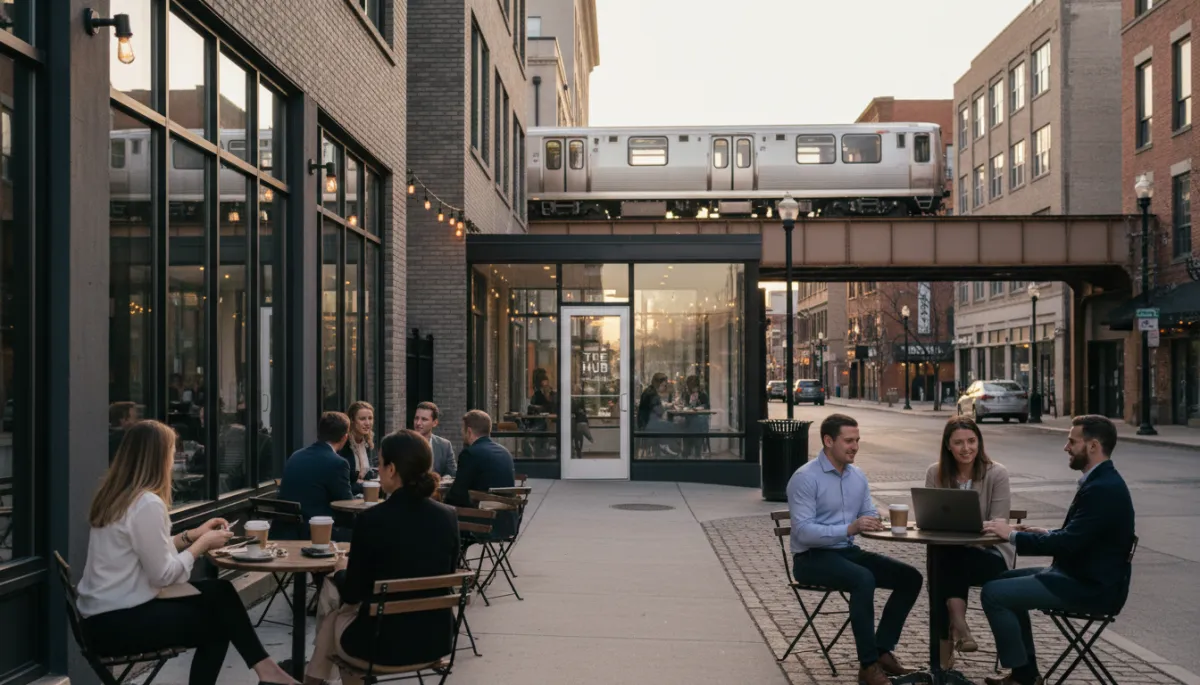
West suburb downtowns blend small-town charm with big-city dining and work options.
Commuting Options: Staying Connected to the City
One of the biggest questions young professionals ask is how easy it is to get from the west suburbs to downtown Chicago. Fortunately, commuting options are a major strength of many communities west of the city. Metra’s BNSF, UP‑West, and Milwaukee District lines run through numerous suburbs, offering frequent service to Union Station or Ogilvie Transportation Center. If you live near a station, your daily trip can be as simple as a short walk, a quick train ride, and then a short walk to your office or a CTA connection.
Typical Metra rides from popular west suburbs range from about 20 to 45 minutes into downtown, which is comparable to many intra-city CTA commutes. For those who drive, major highways like I‑290, I‑294, and I‑88 provide direct routes into the city and to major employment centers in Oak Brook, Lisle, and Naperville. The trade-off is dealing with rush-hour traffic and parking, which can be stressful and expensive, especially if your job is in the Loop.
💡 Pro Tip: If you plan to rely on the train, prioritize west suburbs with walkable Metra stations and check schedule frequency during your preferred commuting hours.
Increasingly, hybrid and remote work are also reshaping how young professionals think about commuting. If you only head into the office a couple of days a week, a slightly longer train ride from the suburbs may feel more than worth it for the added space and quieter evenings you gain at home. Many suburban libraries, coffee shops, and co-working spaces now cater specifically to remote workers, making it easier to stay productive without returning to the city every day.
Affordable Housing: More Space for Your Budget
One of the strongest reasons young professionals consider the Chicago suburbs is the promise of more affordable housing. While “affordable” is relative, rent and purchase prices in many west suburbs compare favorably to popular city neighborhoods. For the cost of a small one-bedroom in a trendy Chicago area, you might find a larger apartment, a modern condo, or even a modest starter home in towns like Berwyn, Forest Park, or Lombard.
This shift can be especially appealing if you are ready to build equity or need a second bedroom for a home office. Lower housing costs also free up your budget for travel, savings, or enjoying the many local amenities the suburbs offer. That said, not all west suburbs are equally affordable. Highly sought-after communities with top-rated schools and historic housing—such as Oak Park or Hinsdale—can command premium prices, sometimes rivaling the city’s more expensive neighborhoods.
The key is to align your expectations with your budget. If you are flexible on having brand-new finishes or living right in the heart of a downtown, you can often secure a comfortable, well-located home that costs less than a comparable unit in the city. Partnering with a local agent who understands West Suburbs living can also help you discover pockets of value that are still under the radar for many young professionals.
Local Amenities: Life Beyond the Workday
Moving away from the city raises a fair concern: will you be bored? In many west suburbs, the answer is increasingly no. Local amenities have expanded significantly, often tailored to the tastes of younger residents. You will find craft breweries, farm-to-table restaurants, boutique fitness studios, and live music venues clustered around revitalized downtowns. Seasonal events—like art walks, outdoor concerts, and food festivals—help foster a sense of community that can be harder to find in a large city.
For outdoor enthusiasts, the west suburbs also offer easy access to forest preserves, bike trails, and riverside paths. Places like the Illinois Prairie Path, Salt Creek Trail, and local park systems provide room to run, cycle, or simply unwind in nature after a long workday. If you are used to squeezing in workouts on crowded city sidewalks or in packed gyms, the extra breathing room can feel like a luxury.
Shopping and everyday errands are generally straightforward as well. Many communities have a mix of independent shops and national retailers, plus grocery options ranging from budget-friendly chains to specialty markets. While you may not have a 24-hour corner store downstairs, you will likely find that most essentials are only a short drive—or sometimes a short walk—away.
Community, Social Life, and Demographics
Another concern for young professionals is whether they will find peers and a social scene that fits their lifestyle. While the Chicago suburbs have long been associated with families, more towns are seeing an influx of residents in their late 20s and 30s. Apartment and townhome developments near train stations often cater specifically to this demographic, offering modern amenities and easy access to nightlife and dining.
Social life in the suburbs looks a bit different from the city. Instead of bar-hopping until 2 a.m., you might find yourself lingering over dinner on a patio, joining a recreational sports league, or attending community events. Many young professionals appreciate this shift, finding that it supports healthier routines and deeper connections with neighbors. Still, if you crave late-night options, the quick train ride back to Chicago means you do not have to give them up entirely.
📌 Key Takeaway: Each west suburb has its own personality—some skew more family-focused, others feel more urban and youthful. Spend time exploring before you commit to a lease or purchase.
Is the West Suburbs Move Right for You?
Ultimately, deciding whether to move to the Chicago suburbs as a young professional comes down to your priorities. If you value affordable housing, more living space, and access to parks and quieter streets—but still want reliable commuting options and vibrant local amenities—then West Suburbs living can be an excellent fit. The region offers a compelling blend of opportunity and comfort that many people only truly appreciate after they move.
On the other hand, if your ideal lifestyle depends on walking out your door into a dense, always-busy urban environment, with nightlife and cultural institutions only blocks away, you may find the pace of the suburbs a bit too relaxed. In that case, a compromise might be choosing a west suburb with a particularly urban-feeling downtown, or delaying the move until your priorities shift—perhaps when remote work becomes permanent, or when you are ready to trade late nights for early mornings and more space.
How to Explore the West Suburbs Before You Decide
If you are curious but not sure, treat your search like a research project. Spend a few weekends visiting different west suburbs. Take the train from downtown to experience the commute firsthand. Walk through downtown areas at different times of day—morning rush, lunchtime, and evening—to see who is out and what the energy feels like. Drop into coffee shops, ask bartenders or baristas what it is like to live there, and check community calendars for events that interest you.
Pay attention to practical details, too: How far is the nearest grocery store? Are there gyms, parks, or trails you would actually use? What are typical rents for studios and one-bedrooms? Can you imagine your daily and weekly routines fitting comfortably into this environment? The more you immerse yourself in the rhythm of a place, the easier it becomes to see whether it aligns with your goals as a young professional.
Final Thoughts
Moving to Chicago’s west suburbs is not just a change of address; it is a lifestyle decision. For many young professionals, the combination of more attainable affordable housing, solid commuting options, and increasingly rich local amenities makes the suburbs a compelling alternative to city living. You gain room to grow—personally, professionally, and financially—while staying close enough to Chicago to enjoy its culture, dining, and career opportunities whenever you choose.
If you are feeling squeezed by city rents or craving a bit more balance, taking a serious look at West Suburbs living may be one of the smartest moves you can make. With thoughtful research and a clear sense of your priorities, the Chicago suburbs can offer not just a place to live, but a place to thrive as a young professional.